Tono Crew Conquers Mount Ena

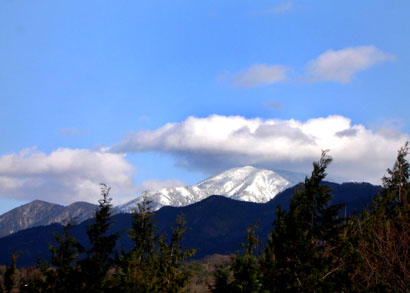
At 2190 meters, Mount Ena is listed as one of the top 100 hikes in Japan. (The view from near my apartment last spring).

Image hosted by Photobucket.com
Following the Nakatsugawa river back to its source...

Image hosted by Photobucket.com

Image hosted by Photobucket.com
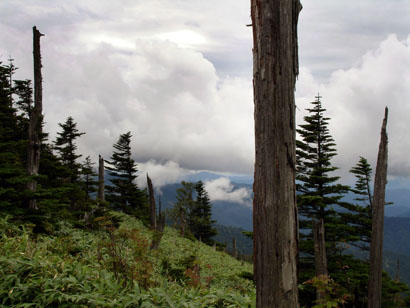
The narrow trail winds its way through thick, green vegetation.

Image hosted by Photobucket.com
What trail, you ask?

Image hosted by Photobucket.com
Just follow the slippery, moss covered rocks uphill for, oh, let's say 2,189 meters!

Along the way, don't forget to stop and smell the fungi!


Image hosted by Photobucket.com
The view from the summit, after 3 and 1/2 hours of hardcore hiking. Somewhere, tucked beneath the folds of those mountains, is my home.

  • Digg
  • Del.icio.us
  • StumbleUpon
  • Reddit
  • RSS

A Walk in the Rice

Ena's emerald waves of grain cover the foot of the mountains like an old, patchwork quilt from Gee’s bend.

A friend, who shall remain nameless, requested that I take a few pictures of my surroundings (obviously he does not appreciate my obsession with Geisha). Since I've had Kuruma-chan (my beloved car), my rice feild wanderings have significantly decreased, which is an absolute travesty! I decided to rectify the situation by reaquainting myself with the country side through which I so often meandered when I first arrived in Ena.

Image hosted by Photobucket.com
Ena's countryside is dotted with Edo period store houses, built separate from the main house to protect family heirlooms and valuables from fire.

Back at home in the states, I remember smelling winter on the autumn winds, shuddering with the brightly colored leaves. In Japan, it is the mouth-watering aroma of autumn, wafting from rice field to rice field that I look forward to during the long summer months. Imagine the sweet smell of popcorn mingled with the fresh scent of summer rain and the smoke of a campfire; the sound of water flowing down from the mountains into moats encircling each emerald patch; pine covered mountains, rising like islands from the steady waves of wind-blown rice; dragonflies hovering over swaying stalks, heavy with the year's harvest, as butterflies dance to the chorus of chirping insects and burping frogs. As autumn draws near, the smell of the rice begins to hang so thick in the air you can almost taste it. 美味しそう!

  • Digg
  • Del.icio.us
  • StumbleUpon
  • Reddit
  • RSS


http://www.eindiangirls.com/wp-content/uploads/2009/03/picture155-450x337.jpghttp://www.eindiangirls.com/wp-content/uploads/2009/03/mix145-450x600.jpg
http://www.eindiangirls.com/wp-content/uploads/2008/10/indian-girls-450x337.jpghttp://www.eindiangirls.com/wp-content/uploads/2008/11/urmila-indian-girl-450x337.jpgImage hosted by Photobucket.com

  • Digg
  • Del.icio.us
  • StumbleUpon
  • Reddit
  • RSS

Jidai Matsuri

An apprentice geisha, or maiko, dressed in Heian period costume at Jidai Matsuri.

The Jidai Matsuri, or Festival of Ages, is one of Kyoto's most famous festivals, along with Aoi Matsuri and Gion Matsuri. Held on October 22, it commemorates Emperor Kammu's decision to move the capital of his Empire from Nara to Kyoto on the same day in the year 794.

Image hosted by Photobucket.com
Chinese influence.

Originally instituted to raise Kyoto's moral after the loss of the capital and Imperial Court to Tokyo in 1868, it begins with the mikoshi (portable shrines) of the first and last Kyoto emperors being carried to the Old Imperial Palace, followed by a 5 hour long procession of approximately 2000 Kyoto natives dressed in lavish, period costumes representing styles from throughout Kyoto's history, beginning with the modernized soldiers of the Meiji era, corresponding with the end of the Kyoto capital in 1868, all the way back to the founding of the capital, during the Heian period.

Image hosted by Photobucket.com
A geisha laughs as she plays with a young girl.

Image hosted by Photobucket.com
A young girl dressed as a child of the Heian court.

Image hosted by Photobucket.com
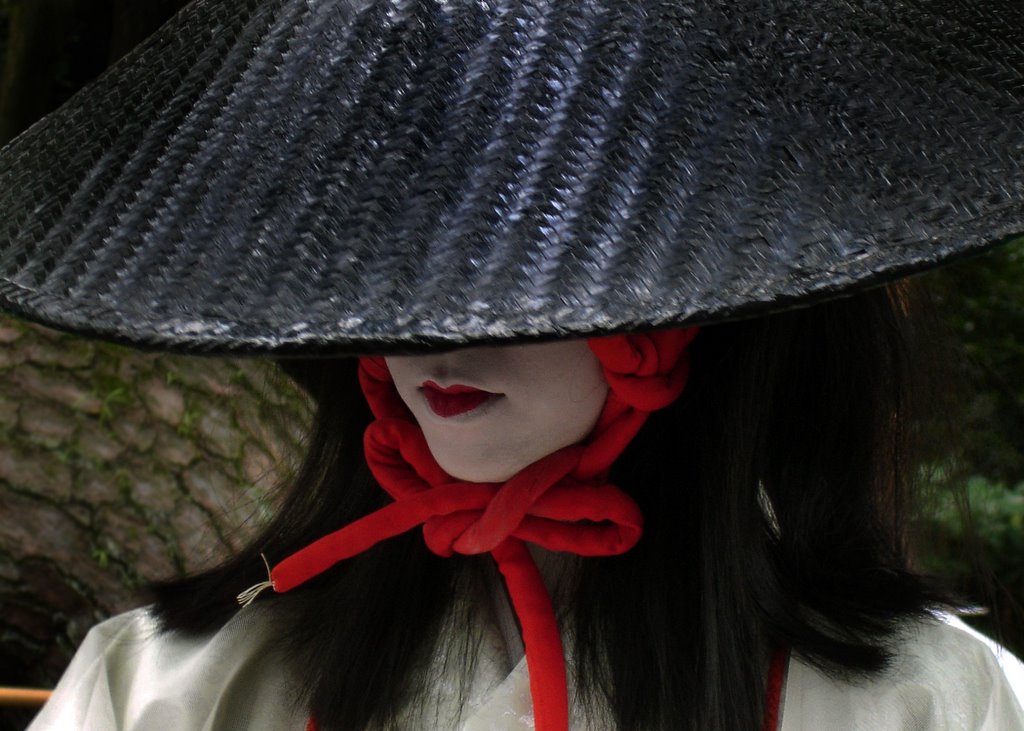
An apprentice Geisha, or maiko, seeking refuge beneath the veil of her Heian period costume.

Image hosted by Photobucket.com
A maiko and geiko chat while an older geisha in the background watches a young maiko take a quit shot with her ketai, or mobile phone.

Image hosted by Photobucket.com
Tomoe-Gozen was the wife of General Kiso Yoshinaka. She fought courageously alongside her husband in battle, one of the few examples of a true female samurai in japanese history.

Image hosted by Photobucket.com

Image hosted by Photobucket.com
MORE COMING SOON!

  • Digg
  • Del.icio.us
  • StumbleUpon
  • Reddit
  • RSS

Gion Matsuri : Yoiyama Kyomai

Image hosted by Photobucket.com
Mihoko (left), recently graduated from senior ranking maiko to full-fledge Geiko, performs Kyomai for the Yoiyama festivities with the maiko Ichimiyo. Their uchiwa, (Japanese fans) are decorated with their name, and the districts of Gion that they represent. When Geiko or maiko entertain during Gion Matsuri, they give their patrons one of these fans as a keepsake.

Image hosted by Photobucket.com
Last time I saw Mihoko, she was dancing as an apprentice in the Miyako Odori. She looks so much more refined and elegant as a Geiko!

Image hosted by Photobucket.com
Kyomai, or Kyoto Style Dance, developed in western Japan under the influence of Noh theatre. Unlike other odori, or kabuki styled dances developed in Edo, Kyomai is performed in Washitsu, Japanese style tatami mat rooms, where its subtle movements, the embodiment of the elegance and sophistication of the imperial court, can be viewed at close range .

Image hosted by Photobucket.com
Kyomai is not meant to be performed on stage, but in the intimacy of Japanese rooms .

Image hosted by Photobucket.com
Gion's entertainers practice the Inoue school of Kyomai. This style of dance is very different from that performed in Kyoto's other entertainment districts

Image hosted by Photobucket.com
The Inoue school is characterized by minimal motions based on the masked drama of Noh and the puppetry of Bunraku.

Image hosted by Photobucket.com
Even in this picture, if you compare the gesture of the hands between the Mihoko (Geisha) and Ichimiyo (maiko), the difference in mastery of these simple movements is clear.

Image hosted by Photobucket.com
Geiko present themselves in a much more subdued fashion because they do not need the bright colors and flashy ornamentation to compensate for their lack of skill.

Image hosted by Photobucket.com
Kyomai symbolizes the gracefulness and lifestyle of the imperial family.

Image hosted by Photobucket.com

This is the fruit of my Japanese language labour...I was able to read the kanji foretelling the appearance of Geiko and Maiko performing Kyomai, as well as the names written on their uchiwa! Obsessed as I am, this gave me a great sense of accomplishment and furthur motivated me to press on! Who knows what gems of information are hidden in the kanji that clutter this country (besides the people that can read them)? Let's fighting ganbaro!

Stay tuned...more Matsuri Maiko pix to come...

  • Digg
  • Del.icio.us
  • StumbleUpon
  • Reddit
  • RSS